Of everything that comes through our doors overnight, breathing trouble is the one where the delay between the first sign and the visit is longest. Breathing changes gradually, pets compensate well until they suddenly cannot, and the early signs look like tiredness rather than an emergency. By the time it is obvious, the margin is small.
That is rarely anybody’s fault. It is simply how respiratory trouble presents, and it is why knowing what to watch for matters.
Count the breaths. It takes thirty seconds
The single most useful thing an owner can do is learn their pet’s resting breathing rate while the animal is well, so they have something to compare against.
Count while your dog or cat is genuinely asleep, not dozing but awake, not panting, not just after exercise. Watch the chest rise and fall; one rise plus one fall is one breath. Count for thirty seconds and double it. The asleep part matters: an awake cat sitting calmly breathes faster and far more variably, and counting one of those against the number below will worry you for nothing.
A healthy sleeping dog or cat normally breathes fewer than thirty times a minute, and most sit in the teens to low twenties. A lower number in a sleeping pet is not a concern on its own. A sleeping rate persistently above thirty is abnormal and worth acting on, even if your pet seems otherwise fine. The same threshold applies to both species, which is unusual and useful. It is the number we ask owners for most often.
What laboured breathing looks like
You are watching for effort, not just speed:
- The belly working. Breathing that uses obvious abdominal effort, so the whole body moves with each breath, rather than just the chest.
- Elbows held out from the body and the neck stretched forward and low. This is a pet trying to open their airway, and it is a posture, not a mood.
- Refusing to lie down, or lying only on the chest rather than on the side. An animal who will not settle all evening is often telling you they cannot breathe lying flat.
- Nostrils flaring with each breath.
- Noise. Wheezing, honking, or a wet, gurgling sound.
- Gum colour. Pale, grey, blue or brick red gums all mean come now. Healthy gums are pink.
Cats break every rule here
This section matters more than the rest of the article. Cats hide respiratory trouble better than any other species we see, and the point at which they show it is the point at which they are already in difficulty.
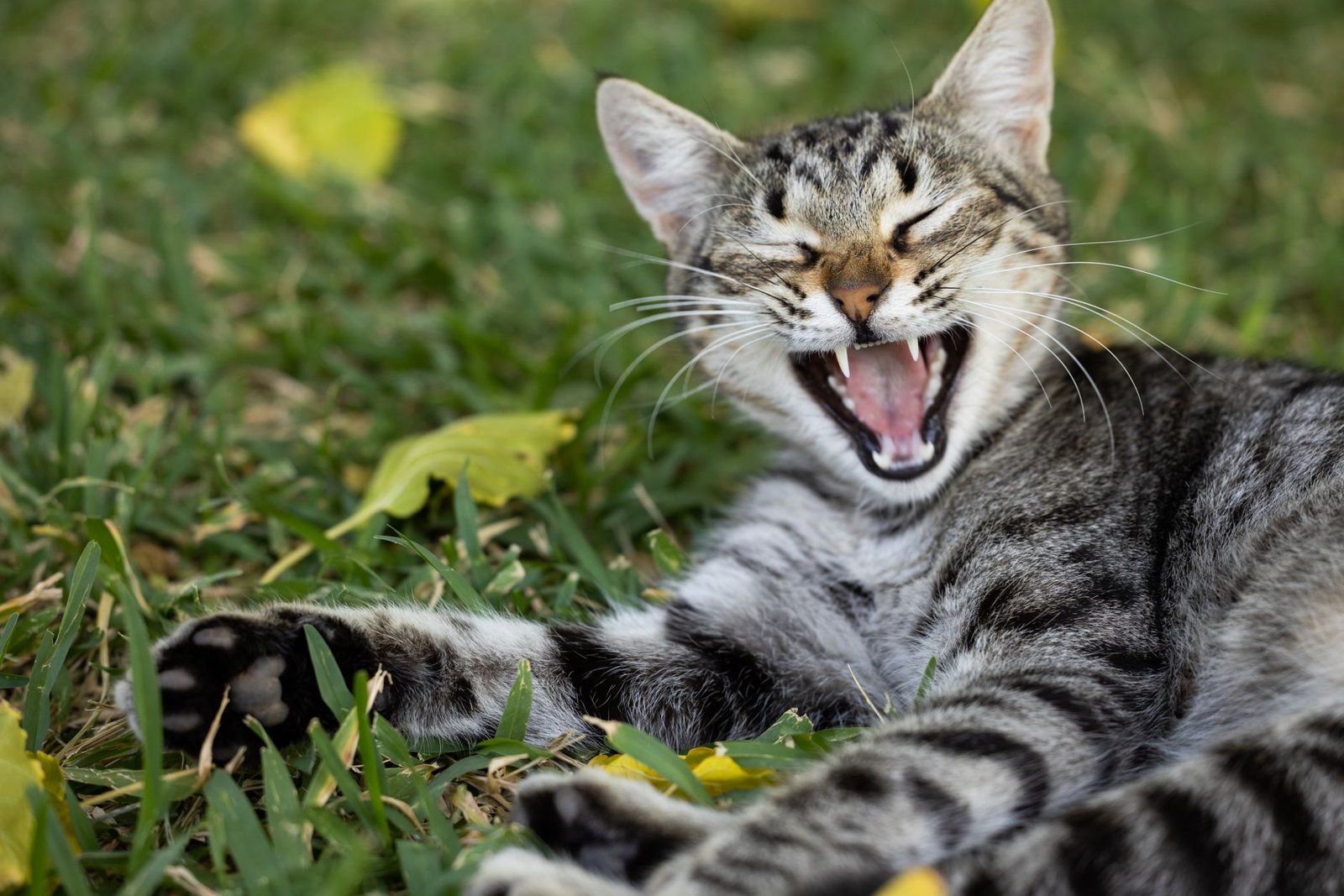
Open-mouth breathing in a cat is an emergency until proven otherwise. Panting is routine in dogs and close to never routine in cats. A cat may pant for a minute or two after hard play, real heat or a stressful car ride and then settle, and that much is accepted as normal. Anything beyond that, any open-mouth breathing at rest, or panting brought on by nothing much at all, needs to be seen immediately. The same goes for a cat whose sides are heaving, who is crouched low with the neck extended, or who has suddenly stopped grooming and hides.
There is a second part to this, and it is counterintuitive. A cat in respiratory distress can be tipped over the edge by handling, restraint and stress. Do not chase them around the house, do not try to examine the mouth, and do not force them into a carrier they are fighting. Move calmly, use a carrier with the top off if that is easier, and if the carrier is a losing battle, a cardboard box or a laundry basket with a towel over it will do. Never travel with a cat loose in the car. Keep the drive quiet, and call ahead so we are ready the moment you arrive.
Come straight in, do not wait
Bring your pet in immediately, at any hour, for any of these:
- Any open-mouth breathing in a cat
- Gums that are blue, grey or pale
- Breathing with obvious abdominal effort, or a sleeping rate persistently above thirty
- Collapse, or weakness alongside fast breathing
- Choking, gagging, or pawing at the mouth
- A pet who will not lie down or settle because of their breathing
- Breathing changes after a fall, a road accident, or a fight
- Breathing changes in a pet who has been in a smoky room
Do not try to give anything by mouth to an animal struggling to breathe, and do not use anything from a human cupboard. Both make things worse and neither buys you time.
What happens when you arrive
Breathing cases are assessed and stabilized before anything else, which sometimes means we take your pet through for oxygen before we take a full history from you. That is deliberate. Oxygen support and a quiet, low-stress environment often do more in the first ten minutes than any investigation would.
Once your pet is stable enough, chest imaging and blood work tell us where the problem sits: the airway, the lungs, the space around the lungs, or the heart. Those four possibilities look similar from the waiting room and need completely different care, which is why the imaging matters. Where fluid needs draining from around the lungs or an airway needs securing, our surgical team is on site around the clock.
Our emergency service runs twenty-four hours a day, seven days a week, including overnight and statutory holidays. There is no hour at which you should be deciding whether to wait until morning with a breathing problem. Call us on your way.
Common questions
My dog pants a lot. When is panting abnormal?
Panting is normal after exercise, in heat, and when excited. It is not normal at rest in a cool room, overnight, or when it does not settle after ten or fifteen minutes of quiet. Panting with any of the effort signs above is not normal at all.
My cat has been breathing fast but is eating normally. Can it wait?
No. Cats continue eating and behaving fairly normally well into serious respiratory trouble. Appetite is not a reliable reassurance in a cat who is breathing fast.
Is reverse sneezing an emergency?
Usually not. Reverse sneezing is a sudden snorting episode that lasts seconds and then stops completely, with the dog entirely normal afterwards. Continuous laboured breathing is a different thing. If you are unsure, record a short video and give us a call.
Should I take a video?
Yes, if it takes you no extra time and does not delay you. Breathing patterns often look different in the clinic than at home. Never stay behind to film a pet who needs to be in the car.
How often should I check the resting rate?
For a healthy pet, occasionally, just so you know their normal. For a pet with a known heart or airway condition, daily. Write the number down. A trend upward over several days is extremely useful information for us.
Speak to the team at Atlas Animal Hospital and Emergency
If your pet is struggling to breathe, do not wait for morning and do not wait to see whether it settles. Call us and come in. We are open around the clock.
Published by the team at Atlas Animal Hospital and Emergency.
This article is educational in nature and is not a replacement for hands-on assessment of your own pet by a veterinarian.
Atlas Animal Hospital & Emergency
5696 Fraser Street, Vancouver, BC V5W 2Z4 (South Vancouver)
Phone: (604) 301-0300
Hours: Open 24 hours a day, 7 days a week