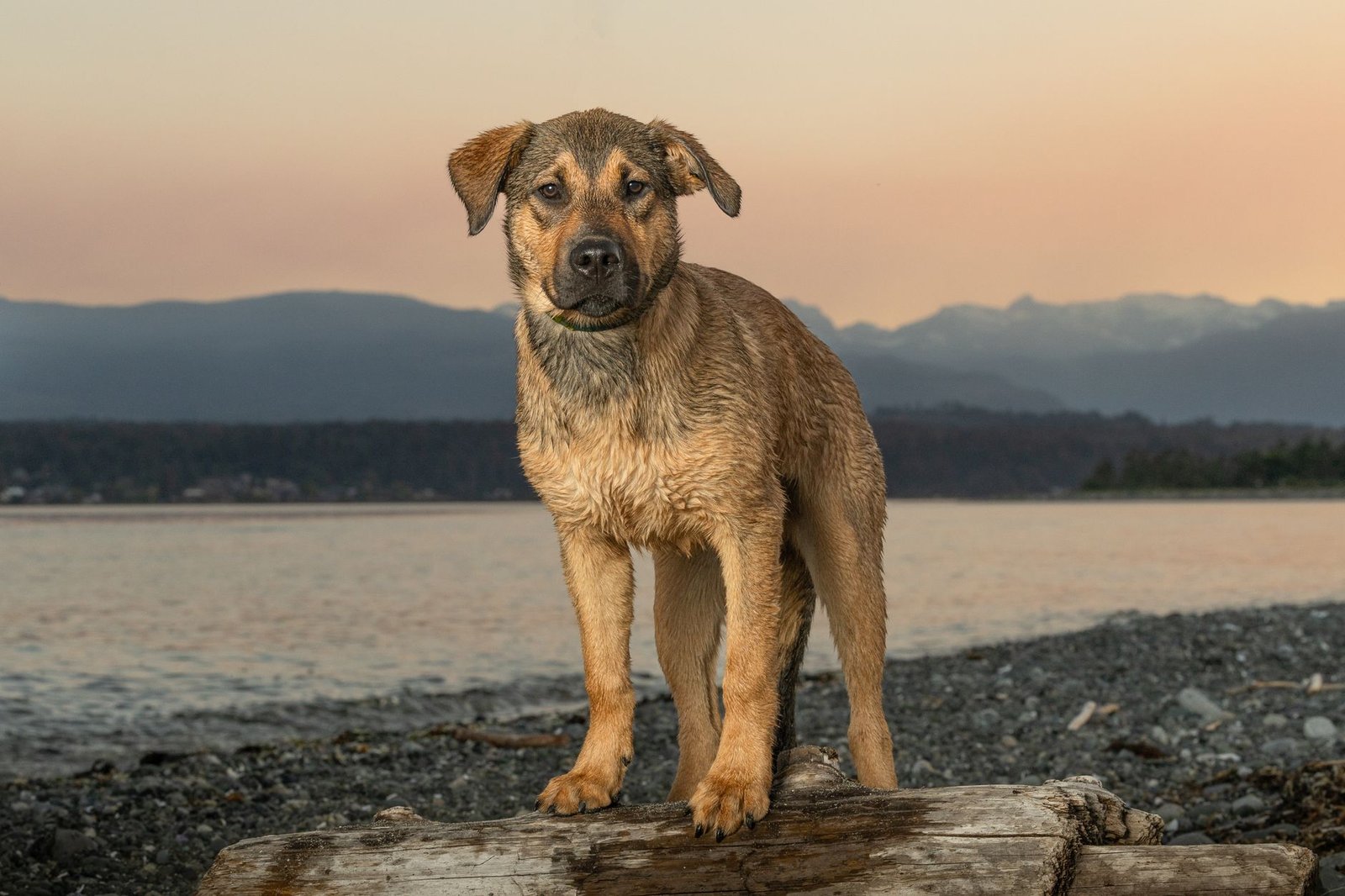
It is one of the great dividing questions of a Vancouver winter. One owner on the block has a greyhound in a padded jacket; another has a husky lying in the rain looking delighted. Both are right. Whether a dog needs a coat depends on the dog, and in this city it depends more on wet than on cold.
Why wet matters more than cold here
Vancouver winters are mild by Canadian standards and relentlessly damp. That combination behaves differently from dry cold. A dry coat traps a layer of warm air against the skin and insulates well. A soaked coat loses most of that, and a wet dog in wind loses heat far faster than a dry dog in colder, still air.
So the useful question is not what the thermometer says. It is whether this particular dog, with this particular coat, will stay dry enough for the length of the walk you have planned.
Dogs who genuinely benefit
- Thin-coated and single-coated breeds. Greyhounds, whippets, vizslas, boxers, pointers, dobermans. Very little undercoat and very little body fat to spare.
- Small dogs. A chihuahua loses heat far faster than a labrador for simple reasons of size, and sits closer to cold wet ground.
- Short-legged dogs, whose chest and belly are in the wet grass regardless of what the weather is doing.
- Puppies, who are less able to regulate their own temperature than adults.
- Older dogs and thin dogs, particularly those with stiff joints, which the cold makes more obvious.
- Dogs clipped short over the winter for any reason.
- Dogs who are unwell or recovering, who have less in reserve.
Dogs who mostly do not
Double-coated northern and working breeds (huskies, malamutes, newfoundlands, bernese, most shepherds and retrievers) carry their own system and generally do better without. Putting a coat on a thick double coat can flatten the undercoat that does the insulating, and trap damp underneath rather than letting it dry.
A healthy adult dog of one of those breeds, moving at pace, is usually more comfortable in the rain than you are.
What a good coat actually does
- Keeps the back and chest dry rather than merely adding bulk. Waterproof outer matters more than padding in this climate.
- Covers the belly and chest on short-legged dogs, which is where the cold wet actually arrives.
- Fits without rubbing, particularly behind the front legs. Check under it after a walk for flattened or damp patches.
- Comes off indoors. A coat left on a dog in a warm house gets uncomfortable, and a damp one against the skin for hours causes its own problems.
- Gets dried between walks, because putting a wet coat back on a dog achieves nothing.
The signs a dog is genuinely too cold
This is the part worth knowing, because dogs rarely make it obvious until they are well past comfortable.
Shivering is the first and most honest signal. After that: slowing down, lifting feet, hunching with the tail tucked, turning for home, or simply stopping. A dog who was keen at the start of the walk and is now reluctant is telling you something, and it is worth listening to rather than encouraging them on.
A dog who becomes weak, very quiet, or stumbly after cold exposure is past the point where a coat is the answer and needs to be seen. Our emergency veterinary services run around the clock for exactly that kind of thing, and because we are open overnight there is never a wait until morning. For the ordinary version, a dog who seems less comfortable outdoors than last winter, a wellness visit is where we work out whether it is the weather or the dog, and our medical services cover what comes of that. Medical grooming is worth a mention for the dogs whose coat is doing less than it should because it is matted underneath.
A few things that trip people up
- A coat is not a substitute for a shorter walk. On a genuinely raw day, two short outings beat one long one for any dog.
- Thin dogs feel it sooner. Body condition changes cold tolerance a great deal, in both directions.
- Older dogs who used to manage may not any more, and that change is often the first visible sign of stiffness.
- Cats outdoors need somewhere dry to get into, and a cat who normally comes home and suddenly does not in cold weather is worth looking for early.
- Check under the coat. Rubbing at the armpits and a damp patch along the spine are the two things owners find late.
Our hours
We are open 24 hours a day, seven days a week, which means there is no closed window to plan around and no overnight gap to worry about.
Most of this article is ordinary winter planning. A dog who is shivering uncontrollably, who has become weak or unsteady after being out in the cold and wet, or who will not warm up once indoors should be seen right away rather than watched.
Common questions
Is there a temperature below which every dog needs a coat?
No single number works, which is why the lists above are by dog rather than by degree. In this climate, wind and rain move the line more than temperature does.
My dog hates wearing one. Worth persisting?
Build it up indoors in short sessions with something good involved, rather than putting it on at the door in the rain. If they still refuse, shorten the walk instead.
What about boots?
Useful for salted sidewalks and for dogs with sore feet, and plenty of dogs never accept them. Rinsing and drying the feet after a walk achieves much of the same.
Do indoor cats need anything?
Not clothing. They do appreciate a warm raised spot away from drafty floors, and older cats particularly seek one out.
Can a dog get too hot in a coat?
Yes, especially on a mild wet day or indoors. If your dog is panting on a winter walk, the coat is doing too much.
Speak to the team at Atlas Animal Hospital & Emergency
Look at your dog rather than the forecast. If they are thin-coated, small, old or clipped, a dry back is worth the investment; if they are built for this, let them enjoy it.
Published by the team at Atlas Animal Hospital & Emergency.
This article is for general educational purposes only and is not a substitute for an in-person veterinary examination or advice about your individual pet. If you have an urgent concern about your pet, contact Atlas Animal Hospital & Emergency right away.
Atlas Animal Hospital & Emergency
5696 Fraser Street, Vancouver, BC V5W 2Z4 (South Vancouver)
Phone: (604) 301-0300
Hours: Open 24 hours a day, 7 days a week